
この記事では、循環リンク リストにノードを挿入する方法を学びます。挿入は、リストに新しいノードを追加するリンク リストの基本的な操作です。循環リンク リストでは、最後のノードが最初のノードに接続してループを作成します。
項目を追加するには主に 4 つの方法があります。
bash if ステートメント
- 空のリストへの挿入
- リストの先頭に挿入
- リストの最後に挿入
- リスト内の特定の位置に挿入
ヘッド ポインターの代わりにテール ポインターを使用する利点
リスト全体を走査して先頭にノードを挿入する必要があります。また、最後に挿入する場合は、リスト全体を走査する必要があります。の代わりに 始める pointer 最後のノードへのポインタを取得する場合、どちらの場合もリスト全体を走査する必要はありません。したがって、リストの長さに関係なく、先頭または末尾への挿入には一定の時間がかかります。
1. 循環リンクリスト内の空のリストへの挿入
空の循環リンク リストにノードを挿入すると、 新しいノード 指定されたデータを使用して、次のポインターがそれ自体を指すように設定し、 最後 これを参照するためのポインタ 新しいノード 。
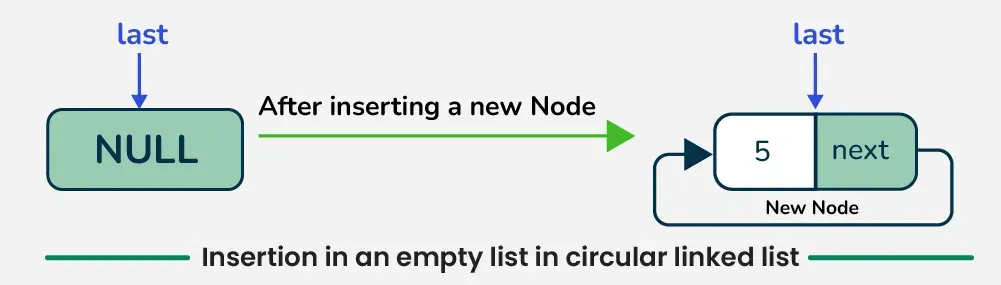 空のリストへの挿入
段階的なアプローチ:
- どうかを確認してください 最後 ではありません nullptr 。もし 真実 戻る 最後 (リストは空ではありません)。
- それ以外の場合は、 新しいノード 提供されたデータを使用して。
- を設定します。 新しいノードの それ自体を指す次のポインター (循環リンク)。
- アップデート 最後 を指す 新しいノード そしてそれを返します。
空のリストへの挿入の詳細については、以下を参照してください。 循環リンク リスト内の空のリストへの挿入
2. 循環リンクリストの先頭に挿入
循環リンク リストの先頭に新しいノードを挿入するには
- まず、 新しいノード そしてそれにメモリを割り当てます。
- リストが空の場合 (最後のポインタが空であることによって示されます) NULL ) 私たちが作るのは、 新しいノード 自分自身を指します。
- リストにすでにノードが含まれている場合は、 新しいノードの を指す次のポインタ 現在の頭 リストの(つまり 最後→次へ )
- 次に、最後のノードの次のポインタを更新して、 新しいノード 。これにより、リストの循環構造が維持されます。
 循環リンクリストの先頭に挿入
 先頭への挿入の詳細については、以下を参照してください。 循環リンクリストの先頭に挿入
3. 循環リンクリストの最後に挿入
循環リンク リストの最後に新しいノードを挿入するには、まず新しいノードを作成し、それにメモリを割り当てます。
JavaScript ドロップダウン
- リストが空の場合 (つまり、 最後 または しっぽ ポインターであること NULL ) リストを次のように初期化します。 新しいノード そして、それ自体を指すようにして、円形の構造を形成します。
- リストにすでにノードが含まれている場合は、 新しいノードの を指す次のポインタ 現在の頭 (つまり 末尾→次へ )
- 次に、更新します 現在の尻尾 を指す次のポインタ 新しいノード 。
- 最後に更新します テールポインタ に 新しいノード。
- これにより、 新しいノード 今は 最後のノード 循環リンクを維持しながらリストに追加します。
 循環リンクリストの最後に挿入
 最後に挿入について詳しくは、以下を参照してください。 循環リンクリストの最後に挿入
4. 循環リンクリストの特定位置への挿入
循環リンク リストの特定の位置に新しいノードを挿入するには、まずリストが空かどうかを確認します。
- もしそうなら、そして 位置 ではありません 1 次に、その位置がリストに存在しないため、エラー メッセージを出力します。私
- の 位置 は 1 次に、 新しいノード そしてそれ自体を指すようにします。
- リストが空でない場合は、 新しいノード リストを走査して、正しい挿入ポイントを見つけます。
- もし 位置 は 1 を挿入します 新しいノード 初めにポインタを適宜調整してください。
- 他の位置については、目的の位置に到達するまでリストをたどって、 新しいノード ポインタを更新することによって。
- 新しいノードが最後に挿入されると、 最後 リストの循環構造を維持する新しいノードを参照するためのポインタ。
 循環リンクリストの特定の位置への挿入
段階的なアプローチ:
- もし 最後 は nullptr そして 位置 ではありません 1 印刷' 無効な位置です! '。
- それ以外の場合は、指定されたデータを使用して新しいノードを作成します。
- 先頭に挿入: pos が 1 の場合、ポインターを更新して最後に戻ります。
- トラバースリスト: ループして挿入ポイントを見つけます。 print '無効な位置です!'範囲外の場合。
- ノードの挿入: ポインタを更新して新しいノードを挿入します。
- 最後に更新: 更新の最後に挿入した場合 最後 。
#include
#include
class Node { int data; Node next; Node(int value){ data = value; next = null; } } public class GFG { // Function to insert a node at a specific position in a // circular linked list static Node insertAtPosition(Node last int data int pos){ if (last == null) { // If the list is empty if (pos != 1) { System.out.println('Invalid position!'); return last; } // Create a new node and make it point to itself Node newNode = new Node(data); last = newNode; last.next = last; return last; } // Create a new node with the given data Node newNode = new Node(data); // curr will point to head initially Node curr = last.next; if (pos == 1) { // Insert at the beginning newNode.next = curr; last.next = newNode; return last; } // Traverse the list to find the insertion point for (int i = 1; i < pos - 1; ++i) { curr = curr.next; // If position is out of bounds if (curr == last.next) { System.out.println('Invalid position!'); return last; } } // Insert the new node at the desired position newNode.next = curr.next; curr.next = newNode; // Update last if the new node is inserted at the // end if (curr == last) last = newNode; return last; } static void printList(Node last){ if (last == null) return; Node head = last.next; while (true) { System.out.print(head.data + ' '); head = head.next; if (head == last.next) break; } System.out.println(); } public static void main(String[] args) { // Create circular linked list: 2 3 4 Node first = new Node(2); first.next = new Node(3); first.next.next = new Node(4); Node last = first.next.next; last.next = first; System.out.print('Original list: '); printList(last); // Insert elements at specific positions int data = 5 pos = 2; last = insertAtPosition(last data pos); System.out.print('List after insertions: '); printList(last); } }
class Node: def __init__(self value): self.data = value self.next = None # Function to insert a node at a specific position in a circular linked list def insertAtPosition(last data pos): if last is None: # If the list is empty if pos != 1: print('Invalid position!') return last # Create a new node and make it point to itself new_node = Node(data) last = new_node last.next = last return last # Create a new node with the given data new_node = Node(data) # curr will point to head initially curr = last.next if pos == 1: # Insert at the beginning new_node.next = curr last.next = new_node return last # Traverse the list to find the insertion point for i in range(1 pos - 1): curr = curr.next # If position is out of bounds if curr == last.next: print('Invalid position!') return last # Insert the new node at the desired position new_node.next = curr.next curr.next = new_node # Update last if the new node is inserted at the end if curr == last: last = new_node return last # Function to print the circular linked list def print_list(last): if last is None: return head = last.next while True: print(head.data end=' ') head = head.next if head == last.next: break print() if __name__ == '__main__': # Create circular linked list: 2 3 4 first = Node(2) first.next = Node(3) first.next.next = Node(4) last = first.next.next last.next = first print('Original list: ' end='') print_list(last) # Insert elements at specific positions data = 5 pos = 2 last = insertAtPosition(last data pos) print('List after insertions: ' end='') print_list(last)
class Node { constructor(value){ this.data = value; this.next = null; } } // Function to insert a node at a specific position in a // circular linked list function insertAtPosition(last data pos) { if (last === null) { // If the list is empty if (pos !== 1) { console.log('Invalid position!'); return last; } // Create a new node and make it point to itself let newNode = new Node(data); last = newNode; last.next = last; return last; } // Create a new node with the given data let newNode = new Node(data); // curr will point to head initially let curr = last.next; if (pos === 1) { // Insert at the beginning newNode.next = curr; last.next = newNode; return last; } // Traverse the list to find the insertion point for (let i = 1; i < pos - 1; ++i) { curr = curr.next; // If position is out of bounds if (curr === last.next) { console.log('Invalid position!'); return last; } } // Insert the new node at the desired position newNode.next = curr.next; curr.next = newNode; // Update last if the new node is inserted at the end if (curr === last) last = newNode; return last; } // Function to print the circular linked list function printList(last){ if (last === null) return; let head = last.next; while (true) { console.log(head.data + ' '); head = head.next; if (head === last.next) break; } console.log(); } // Create circular linked list: 2 3 4 let first = new Node(2); first.next = new Node(3); first.next.next = new Node(4); let last = first.next.next; last.next = first; console.log('Original list: '); printList(last); // Insert elements at specific positions let data = 5; let pos = 2; last = insertAtPosition(last data pos); console.log('List after insertions: '); printList(last);
出力
Original list: 2 3 4 List after insertions: 2 5 3 4
時間計算量: O(n) 特定の位置を見つけるにはリストを走査する必要があります。
補助スペース: ○(1)